
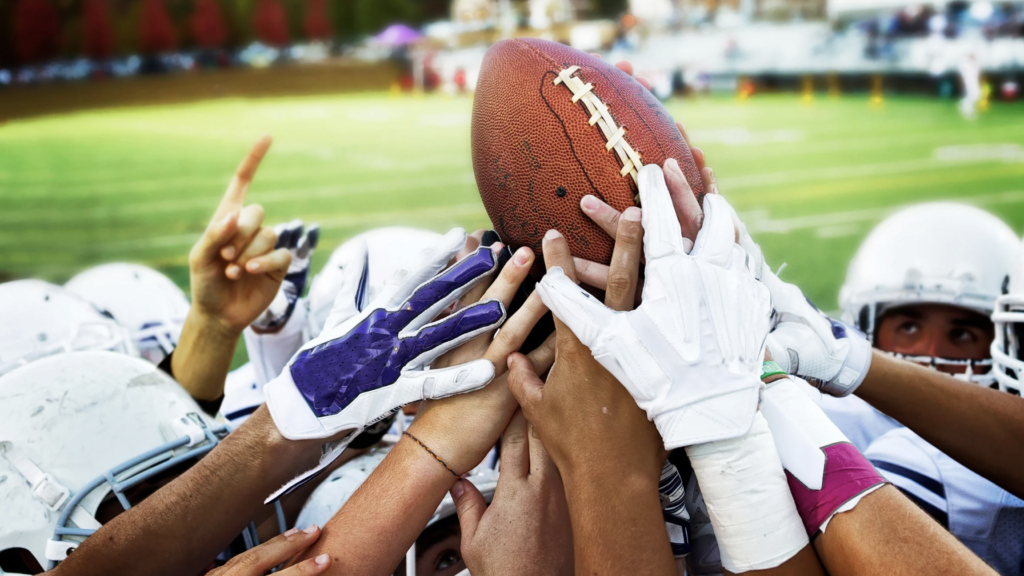
Football season is here, and Saturdays are once again filled with packed stadiums, school colors, rivalries, tailgates, and unforgettable moments. However, behind everything fans see on the field is another powerful force: college football marketing.
At WJ Media Group, we understand how sports, storytelling, branding, and social media can work together to create meaningful connections. In fact, college football is one of the best examples of how strong marketing can turn a team into a brand, a game into an experience, and fans into a loyal community.
College football is much more than a sport. For millions of people, it represents tradition, identity, community, and entertainment. As a result, college programs have access to something every business wants: an audience that genuinely cares.
College Football Marketing Is About More Than Selling Tickets
When people think about sports marketing, advertisements, ticket sales, merchandise, and sponsorships may come to mind first. College football marketing, however, goes much deeper.
At its core, the goal is to create an emotional connection between a team and its fans. Supporters do not simply watch their favorite college football program. Instead, they wear the colors, follow players online, attend games, participate in traditions, debate rankings, buy merchandise, and support their school year after year.
Because of that loyalty, college football programs can build incredibly strong brands.
At WJ Media Group, we believe effective marketing should do more than simply promote a product or service. Rather, it should create a connection between a brand and its audience. College football provides a perfect example of that principle.
Traditions Are Powerful Branding Tools
One of the biggest advantages college football has is tradition. Every school has something that makes its game-day experience unique.
For example, those traditions might include:
- Fight songs
- Mascots
- Stadium entrances
- Student section chants
- Rivalry trophies
- Tailgating traditions
- School colors
- Pregame rituals
Together, these traditions become recognizable brand assets. More importantly, they give fans something memorable and emotional to associate with the program.
Modern marketing has also given universities new ways to share those traditions. A tradition that once existed only inside a stadium can now reach millions of people through TikTok, Instagram, YouTube, and other digital platforms.
For instance, a 15-second video showing a football team running onto the field can generate thousands of views and shares. Therefore, old-school traditions and modern content marketing can work together extremely well.
Social Media Has Changed College Football Marketing
Social media has completely transformed college football marketing.
Years ago, fans depended heavily on television, newspapers, radio, and sports websites to follow their favorite teams. Today, however, athletic programs can speak directly to their audiences every day.
Instagram, TikTok, YouTube, X, and other platforms allow teams to share:
- Behind-the-scenes videos
- Player interviews
- Locker-room celebrations
- Uniform reveals
- Recruiting announcements
- Game-day graphics
- Highlights
- Mic’d-up practices
- Fan reactions
- Short-form videos
More importantly, the most successful programs understand that fans want more than scores. They also want personality, access, entertainment, and a deeper connection to the team.
As a result, social media has become one of the most important parts of college football marketing.
Businesses can learn from this strategy as well. At WJ Media Group, we view social media marketing as more than simply posting on a schedule. Instead, content should give people a reason to stop scrolling, engage, share, and remember the brand.
College Athletes Are Becoming Brands
Another major change in sports marketing is the rise of personal branding among college athletes.
Thanks to social media, players can now build audiences that extend far beyond their universities. In some cases, a college athlete may develop hundreds of thousands of followers before ever becoming a professional player.
Consequently, athletes can become valuable marketing partners for brands.
Name, image, and likeness opportunities have also created new ways for businesses to work directly with athletes. Rather than relying only on traditional stadium advertising, companies can partner with players whose personalities and audiences fit their target market.
Meanwhile, athletes benefit from understanding personal branding themselves. Their social media presence, content style, public image, and communication can influence future partnerships and opportunities.
Therefore, marketing is no longer limited to the university. Increasingly, the athletes themselves are becoming media brands.
Game Day Is One Huge Marketing Experience
A college football game is not simply a sporting event. Instead, it is an entire brand experience.
Before kickoff even happens, fans may encounter sponsored tailgates, branded signs, merchandise, promotional booths, social media displays, giveaways, and video content.
Inside the stadium, the marketing continues through scoreboard promotions, sponsor announcements, advertisements, merchandise, and interactive experiences.
Because these moments happen throughout the entire day, the strongest sports marketers understand that every interaction matters.
Even more importantly, fans often begin marketing the event themselves.
After all, supporters frequently post photos from the tailgate, videos from the student section, stadium views, outfits, celebrations, and reactions. In turn, their friends and followers are exposed to the team and its atmosphere.
That organic exposure is extremely valuable because it feels authentic rather than forced.
Rivalries Create Powerful Marketing Opportunities
Few things create engagement like a great college football rivalry.
Rivalry games already have history, emotion, competition, and anticipation built into them. Therefore, marketers do not need to manufacture excitement from scratch.
Instead, programs can create content around:
- Historic moments
- Famous plays
- Rivalry records
- Memorable players
- Fan reactions
- School traditions
- Game predictions
- Friendly trash talk
Additionally, sponsors can take advantage of the excitement surrounding rivalry week.
A restaurant might offer a game-day special, while a clothing company could launch limited-edition merchandise. Similarly, a local business could create a social media campaign asking customers to choose which team they think will win.
At WJ Media Group, we often emphasize the importance of joining conversations that an audience already cares about. Rather than forcing a promotion, successful marketing finds a natural way for a brand to become part of the experience.
Sponsorships Connect Businesses With Passionate Fans
College football also offers businesses access to some of the most passionate audiences in sports.
Sponsors can connect with those audiences through:
- Stadium signage
- Social media campaigns
- Digital advertising
- Tailgate sponsorships
- Athlete partnerships
- Game-day promotions
- Giveaways
- Branded fan experiences
- Broadcast advertising
However, simply placing a logo somewhere does not guarantee engagement.
The strongest sponsorships create relevance.
For example, a restaurant could sponsor a pregame tailgate, while an apparel company might create exclusive team merchandise. Likewise, a local brand could partner with an athlete for a community event or social media campaign.
When the partnership makes sense, fans are more likely to remember it.
College Football Marketing Can Help With Recruiting
Marketing also plays an important role in recruiting.
Imagine a high school football player comparing several universities. One program’s social media account features packed stadiums, professional videos, incredible facilities, player stories, behind-the-scenes footage, and exciting game-day content.
Immediately, that content creates an impression.
Moreover, it allows a recruit to picture what being part of the program might actually feel like.
For many athletes, social media may even provide one of their first impressions of a university. Consequently, every video, graphic, photo, and caption can influence how the program is perceived.
In marketing, perception matters. The same principle applies to businesses trying to attract customers, employees, clients, or partners.
Fans Have Become Content Creators
One of the most interesting developments in college football marketing is the growing importance of fan-generated content.
During a typical game day, thousands of supporters are creating content at the same time.
They may share tailgate photos, stadium videos, reactions, memes, predictions, outfits, and celebrations.
Instead of ignoring that content, smart programs encourage it.
For example, teams can promote hashtags, run contests, feature fan photos, create interactive displays, or repost supporter content. As a result, fans become active participants in the brand rather than passive spectators.
The same strategy can work for businesses.
If customers enjoy an experience enough to photograph it, record it, tag the company, or tell their friends about it, that audience is helping expand the brand’s reach.
What Businesses Can Learn From College Football Marketing
You do not need a 100,000-seat stadium to use these strategies.
In fact, businesses of almost any size can learn from college football marketing.
Build a community, not just an audience.
When customers feel connected to a brand, they are more likely to return, engage, and recommend it.
Create traditions.
For example, recurring events, weekly specials, annual promotions, or signature experiences can give customers something to anticipate.
Tell stories.
People often connect more strongly with personalities, experiences, and stories than traditional advertisements.
Use social media to entertain.
Not every post needs to sell something. Instead, educational, entertaining, and behind-the-scenes content can help build stronger relationships.
Create shareable experiences.
Give customers something worth photographing, recording, tagging, or talking about.
Understand emotion.
Ultimately, people often remember how a brand made them feel long after they forget a specific advertisement.
These principles are central to how WJ Media Group approaches modern marketing.
WJ Media Group Helps Brands Build Stronger Connections
The same strategies that make college football marketing so effective can also help businesses grow.
At WJ Media Group, we help brands strengthen their digital presence through services such as:
- Social media marketing
- Content creation
- Search engine optimization
- Website development
- Email marketing
- Digital advertising
- Video content
- Branding strategy
However, the goal is not simply to produce more content.
Instead, effective marketing should create content that people actually notice, remember, and interact with.
Whether you are marketing a sports organization, local business, restaurant, retail brand, professional service, or growing company, the fundamentals remain similar.
First, create a clear identity. Next, understand your audience. Then, tell stories that matter to them. Finally, give people a reason to engage and come back.
The Future of College Football Marketing
College football marketing will continue to evolve.
Short-form video, athlete partnerships, artificial intelligence, personalized content, data-driven campaigns, and interactive fan experiences will likely become even more important.
Nevertheless, the foundation will remain the same.
People care about college football because they feel connected to it. Therefore, the most effective marketing will continue to strengthen that emotional connection rather than simply pushing advertisements.
As technology changes, the platforms may look different. The need for authentic storytelling, however, will remain.
The Real Power of College Football Marketing
When thousands of fans fill a stadium wearing the same colors, singing the same songs, and supporting the same team, they are experiencing something bigger than a traditional marketing campaign.
Still, great college football marketing helps strengthen that experience.
It can transform players into recognizable personalities, traditions into content, games into experiences, and fans into communities.
Ultimately, that is why businesses should pay attention.
The best marketing does not simply tell people what you sell. Instead, it gives them something they want to be part of.
At WJ Media Group, that is the kind of connection we help brands create.
Ready to strengthen your brand, social media presence, or digital marketing strategy? Contact WJ Media Group and let’s create marketing your audience actually wants to engage with.